16 May 2026 · thoughts
Post-AI Renaissance?
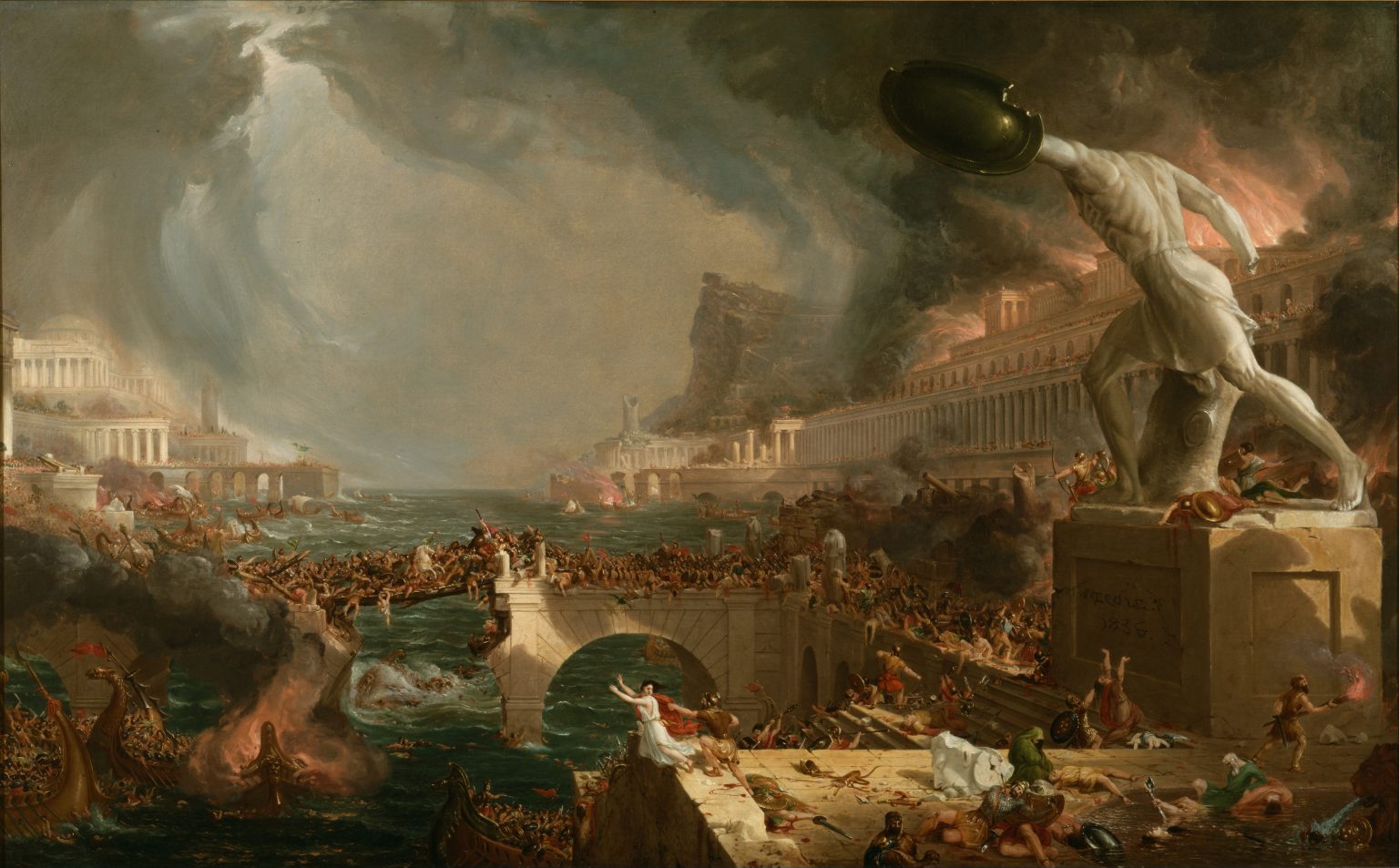
I was watching a video today titled “How Ai Slop Will Spark the Next Human Renaissance.” It presented the idea of slop pushing humanity towards the rediscovery of creation and appreciation of the human messiness. It is something I have been thinking about for a while now.
More than once, when me and my girlfriend were walking around, we saw ads that were clearly generated, trying to sell an imaginary burger or fruits or happy farmers with their produce. There is a growing apathy towards businesses that rely on AI to generate branding materials that were previously the work of photographers or illustrators, 3D artists and graphic designers. I am not saying this from the point of view of a creative who can lose his job to AI. I am looking at it from the perspective of an average buyer. From my need to see a human creation. The value of it – knowing the hours spent on doing good work. Of a craft. And my desire to be a consumer of the creation of a human, not an LLM.
And it’s not just me. The more I read comments from hopefully real humans on the web or talking to people in real life, this sentiment is somewhat shared. Unfortunately, there is a bias to the web – the ones that would comment on it are the ones that notice the AI usage. In real life, I rarely speak to someone who spots AI ads or images, posts, comments or videos. This is my main concern to the thesis of the video – the need for us as humans to connect to other human’s creations. To hear the messy speech, to see an artwork or read a book from someone who has lived and created based on that experience.
“So if I asked you about art you’d probably give me the skinny on every art book ever written. Michelangelo? You know a lot about him. Life’s work, political aspirations, him and the pope, sexual orientation, the whole works, right? But I bet you can’t tell me what it smells like in the Sistine Chapel. You’ve never actually stood there and looked up at that beautiful ceiling. Seen that.”
— Sean, Good Will Hunting
This was referenced in the video and it’s a powerful quote. But the moment I saw it, I thought – that is if the AI is not faking it. What if it is? What if through data, it would have access to that information and simulate what a human says or experiences? And what about all visitors who never notice these details? Are they not humans? Just because they didn’t stop to sense the space, smell, sound, see the art and think of the deep history each stone has gone through?
I want what the video creator said to become the truth. And I am certain a portion of it would. But in a vast world, with billions of unique human experiences, I have a hard time seeing this possible future and think ‘yes, that’s how it would be’. I am worried that the mass of our future experience would end gravitating towards world influenced by AI in ways we can no longer spot. A world we would grow into, finding it natural, even if every part of it is tainted by the gen-ai’s touch. The books we read – would some be fully written or edited or outlined or reworked via AI? Likely. I think it’s completely realistic to expect a moment in time where a full-length book series could reach world-class writer’s level via AI. I see no reason why this would not be possible. If anything, an AI system could “experience” – that is, mimic the experience of real human’s recordings in a much vaster scope than the human brain is capable of.
Would we call this slop? Slop today is real low-quality output – it’s going nowhere, it’s full of hallucinations, lack of structure, bland tropes and repeated sentence structures which we roll our eyes at. But why do we believe it would never get better? If the rate of improvement remains then what, in 5, 10, 20 years – why not expect AI work to surpass that of the best writers? And when this happens, I wouldn’t call it slop anymore. What if the text written is indistinguishable from a creative writer? What if it comes up with new stories, characters, ideas, styles and pushes creative writing to new places, the same way human writers have always done? This is my problem and worry. If it gets to this level, the only human creation you would enjoy or believe is one that is 100% guaranteed to be real. You’d have to see it. But you wouldn’t go watch a writer type for years to release a novel.
I am a fan of Brandon Sanderson; I have read almost all series he published and loved every second of it. And for years to come, all his work would be genuine human craft of extremely high level. Words I can trust to be from a real writer sitting behind this name. But what about a new generation of readers in 20 years from now? How would they read the future names of writers and see the faces of real humans attached to them, writers that have only begun producing work in the AI era? And their works being indistinguishable from what Brandon produces today? Would these readers care if the work is generated with placeholder human to promote them? Even if that writer does read the books and knows the stories to talk about as a real author?
This highlights the problem I see in the video I opened with. Even if a Renaissance era were to come, how could we ever know that the produced work is of a human hand if the clankers could mimic it 1:1 in the future? Once again, look at the speed of development. Compare gen-ai today vs 5 years ago. Consider the growth of compute scale, investments and knowledge. Consider the AI being used to help grow itself. The pace is likely to only speed up until there is a massive new discovery or approach that will put us into unknown territory.
Where am I going with this? I think we might see an inversion to the globalism – to the open nature of the current world. The internet has lost its genuine feel from 15 years ago. Now, almost every post could be AI generated. Every comment, shorts stitched automatically from farm accounts, content generated and more.
Instead, I think that we might look inwards more. Towards smaller circles. That is the town, the neighborhood, the family and friends. More real interactions where we can see the craft of real people. More real-life events and less digital noise. And as it was shown in the video – the craft of carpenters, small shops, hand-drawn signs, furniture from a shop where you can enter and see the person working on it, talk about it, request embellishments, personal fit and more. If anything, possible job losses could push more people to such a market. And if we see the need for it, it might grow. A split into massive systems – the one moving the world (AI based companies) and the day-to-day life of everyone.